Candida Alvarez
(b. 1955)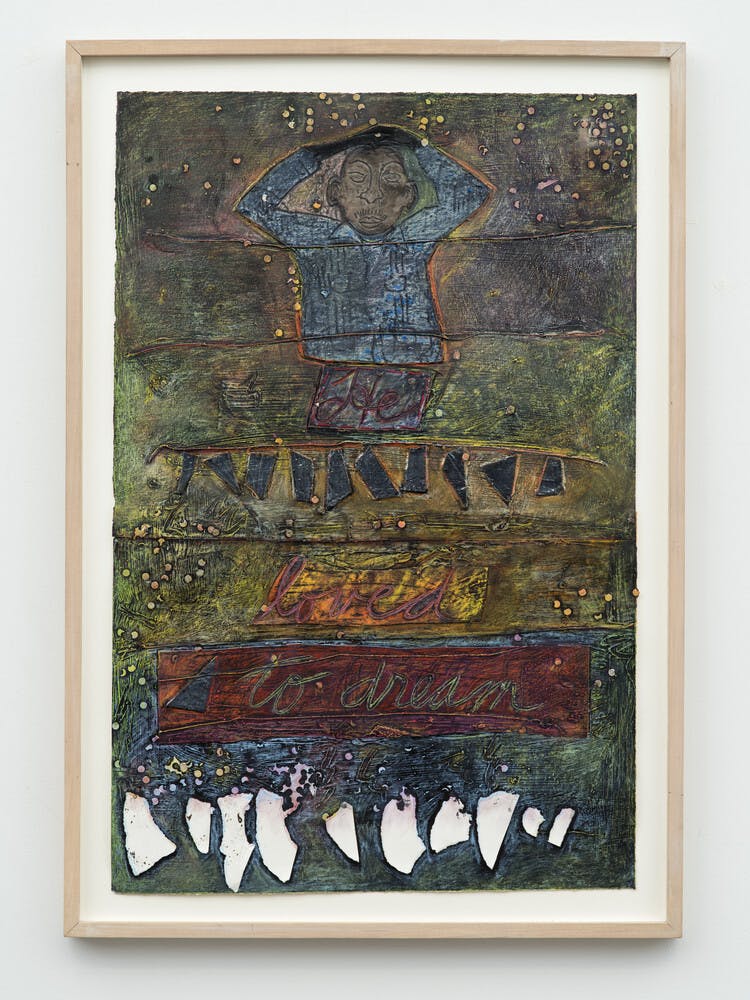
Candida Alvarez’s art practice spans painting, drawing, collage, and installation. A maker of both abstract and figurative work, Alvarez often incorporates bright colors and rich textural buildups of paint and other materials into her artworks.

Biography
Raised in Brooklyn by immigrant parents from Puerto Rico, Alvarez began her career through various involvements with art institutions across New York City. In the late 1970s Alvarez worked as a curator at El Museo del Barrio. She was part of a collective that organized the museum's group exhibition Confrontación: ambiente y espacio (Confrontation: Environment and Space) (1977), which also included her work. During the early 1980s Alvarez participated in the International Studio and Workspace Program at MoMA PS1 (then PS1 Contemporary Art Center). She was a Studio Museum artist in residence from 1984 to 1985, and she completed an MFA at the Yale School of Art in 1997. In 1998, Alvarez moved to Chicago, where she began teaching at the School of the Art Institute of Chicago.
Alvarez draws inspiration for her works from memories, photographs, music, and everyday experiences. Using these wide-ranging references, Alvarez produces vibrantly colored compositions that fill her canvases and pages with shapes and texture. Her earlier works from the 1970s and 1980s often included figuration alongside abstract shapes and fields of color. These works frequently reference her experiences as a woman of color in a predominantly white and male art world.
Alvarez later shifted to mainly working in abstraction. She began to incorporate conceptual strategies into her work during her graduate studies in the late 1980s. During this period of her career, Alvarez made a number of works using gridded structures as a starting point. Her grids—sometimes made of nails hammered directly onto a wall, or at other times drawn by the artist—might imply that her works followed the kinds of logical, ordered systems that many conceptual artists espoused. However, for Alvarez, the grid was another structure to play within, and often she would make gestural lines or marks on top of her grids based on intuition rather than a logical set of rules. In the decades that followed her graduate studies, Alvarez continued to explore abstraction. She began using blocks of bright colors to make up her works.
Alvarez’s solo exhibitions include Candida Alvarez: Circle, Point, Hoop (2025) at El Museo del Barrio and Candida Alvarez: Here (2017) at the Chicago Cultural Center. She has presented in group exhibitions including Forecast Form: Art in the Caribbean Diaspora, 1990s–Today (2022) at the Museum of Contemporary Art Chicago, no existe un mundo poshuracán: Puerto Rican Art in the Wake of Hurricane Maria (2022) at the Whitney Museum of American Art, ESTAMOS BIEN – La Trienal 20/21 (2020) at El Museo del Barrio, and others. The Studio Museum first acquired her work in 1986.
Candida Alvarez
(b. 1955)Candida Alvarez’s art practice spans painting, drawing, collage, and installation. A maker of both abstract and figurative work, Alvarez often incorporates bright colors and rich textural buildups of paint and other materials into her artworks.
He Loved to Dream, 1985
Biography
Raised in Brooklyn by immigrant parents from Puerto Rico, Alvarez began her career through various involvements with art institutions across New York City. In the late 1970s Alvarez worked as a curator at El Museo del Barrio. She was part of a collective that organized the museum's group exhibition Confrontación: ambiente y espacio (Confrontation: Environment and Space) (1977), which also included her work. During the early 1980s Alvarez participated in the International Studio and Workspace Program at MoMA PS1 (then PS1 Contemporary Art Center). She was a Studio Museum artist in residence from 1984 to 1985, and she completed an MFA at the Yale School of Art in 1997. In 1998, Alvarez moved to Chicago, where she began teaching at the School of the Art Institute of Chicago.
Alvarez draws inspiration for her works from memories, photographs, music, and everyday experiences. Using these wide-ranging references, Alvarez produces vibrantly colored compositions that fill her canvases and pages with shapes and texture. Her earlier works from the 1970s and 1980s often included figuration alongside abstract shapes and fields of color. These works frequently reference her experiences as a woman of color in a predominantly white and male art world.
Alvarez later shifted to mainly working in abstraction. She began to incorporate conceptual strategies into her work during her graduate studies in the late 1980s. During this period of her career, Alvarez made a number of works using gridded structures as a starting point. Her grids—sometimes made of nails hammered directly onto a wall, or at other times drawn by the artist—might imply that her works followed the kinds of logical, ordered systems that many conceptual artists espoused. However, for Alvarez, the grid was another structure to play within, and often she would make gestural lines or marks on top of her grids based on intuition rather than a logical set of rules. In the decades that followed her graduate studies, Alvarez continued to explore abstraction. She began using blocks of bright colors to make up her works.
Alvarez’s solo exhibitions include Candida Alvarez: Circle, Point, Hoop (2025) at El Museo del Barrio and Candida Alvarez: Here (2017) at the Chicago Cultural Center. She has presented in group exhibitions including Forecast Form: Art in the Caribbean Diaspora, 1990s–Today (2022) at the Museum of Contemporary Art Chicago, no existe un mundo poshuracán: Puerto Rican Art in the Wake of Hurricane Maria (2022) at the Whitney Museum of American Art, ESTAMOS BIEN – La Trienal 20/21 (2020) at El Museo del Barrio, and others. The Studio Museum first acquired her work in 1986.